Ever wondered why some service dogs cruise through public spaces like they own the place, while others seem to struggle? Turns out, there’s a gold standard for how service dogs should behave in public—and understanding it can make or break their effectiveness. But fear not! We’re diving deep into everything you need to know about service dog public space standards. You’ll learn what these standards are, how to train your service animal accordingly, and tips to avoid common training pitfalls.
Table of Contents
- Key Takeaways
- Why Service Dog Public Space Standards Matter
- Step-by-Step Guide to Training Your Service Dog
- Best Practices for Maintaining Standards
- Real-Life Success Stories
- Frequently Asked Questions
- Conclusion
Key Takeaways
- Service dog public space standards ensure safety, functionality, and acceptance in shared environments.
- Training focuses on behavior control, obedience, and task performance without distractions.
- Ignoring proper standards can lead to legal issues, public complaints, and even denial of access rights.
- Success hinges on consistent practice, realistic scenarios, and patience during training phases.
Why Service Dog Public Space Standards Matter
I’ll admit it—I’ve seen more than one “service” dog lose its cool at the grocery store (looking at you, Chihuahua tearing through the cereal aisle). It’s awkward, disruptive, and honestly kind of embarrassing for everyone involved. And no, slapping a vest on Max doesn’t mean he’s ready for prime time.
But here’s the hard truth: failing to meet service dog public space standards isn’t just bad manners; it undermines the entire system designed to protect legitimate working animals. These standards exist because poorly trained dogs create skepticism around all service animals, making life harder for people who genuinely rely on them.

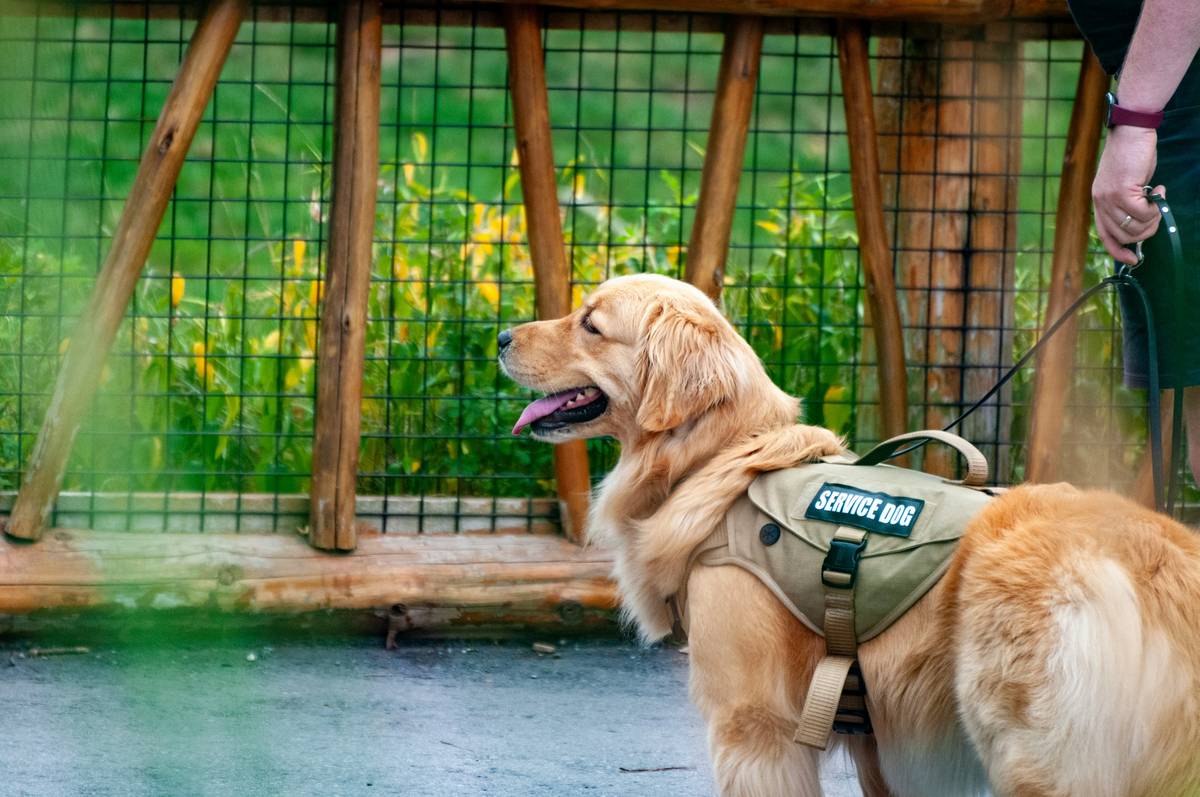
A well-trained service dog demonstrates calm behavior in a busy environment.
Step-by-Step Guide to Training Your Service Dog
Optimist You: “Let’s do this! A little effort now means endless freedom later.”
Grumpy You: “Ugh, fine—but only if coffee’s involved.”
Step 1: Start with Basic Obedience
No shortcuts here—basic commands like “sit,” “stay,” “heel,” and “come” form the foundation of every successful service dog. Without these basics, forget advanced tasks. Invest time reinforcing discipline before moving forward.
Step 2: Practice Impulse Control
This is where many handlers trip up. Does your pup ignore food dropped on the floor? Resist barking when someone walks by with a squeaky toy? If not, impulse control exercises are essential. Try leaving treats on the ground and rewarding your dog only when they remain still.
Step 3: Simulate Real-World Scenarios
The real test happens outside your living room. Take your dog to parks, malls, and restaurants (where allowed) to expose them to crowds, noise, and unpredictable elements. Reward calm behavior consistently throughout.
Best Practices for Maintaining Standards
- Never skip grooming: Cleanliness reflects professionalism. Regular baths, nail trims, and brush sessions keep your dog looking sharp.
- Keep vaccinations updated: Health checks aren’t optional—they’re mandatory under most public space regulations.
- Practice regularly: Consistency beats intensity. Short daily drills beat infrequent marathon sessions.
- Respect boundaries: Even superstars need breaks. Watch for signs of stress and adjust accordingly.
Real-Life Success Stories
Meet Bella, a Golden Retriever trained as a psychiatric service dog. Before training, she had a habit of pulling on her leash whenever kids ran past. Her handler worked tirelessly using the steps above, adding patience-building games near playgrounds. Fast forward six months, and Bella breezes through crowded streets without batting an eye. Now THAT’S chef’s kiss.
Frequently Asked Questions
What qualifies as a public space for service dogs?
Any area open to the general public falls under this category, including businesses, transportation hubs, schools, and government buildings.
Can my emotional support animal qualify as a service dog?
Not unless it performs specific tasks related to a disability. Emotional support animals lack the specialized training required for full public access rights.
What happens if my dog violates service dog public space standards?
You may be asked to leave the premises. Repeated violations could result in challenges to your dog’s legitimacy or even local intervention.
Conclusion
Whew—you made it! Let’s recap:
- Meeting service dog public space standards ensures harmony between humans, pets, and society.
- Training involves mastering basic obedience, impulse control, and real-world adaptability.
- Consistency, care, and respect go a long way toward maintaining high standards.
Remember, behind every amazing service dog is a dedicated handler willing to put in the work. So grab that leash, fire up the kettle, and get started!
P.S.: Like a Tamagotchi, your SEO needs daily care.
Haiku edition:
Leash clicks, paws pause.
Standards guide, respect grows.
Public spaces bloom.